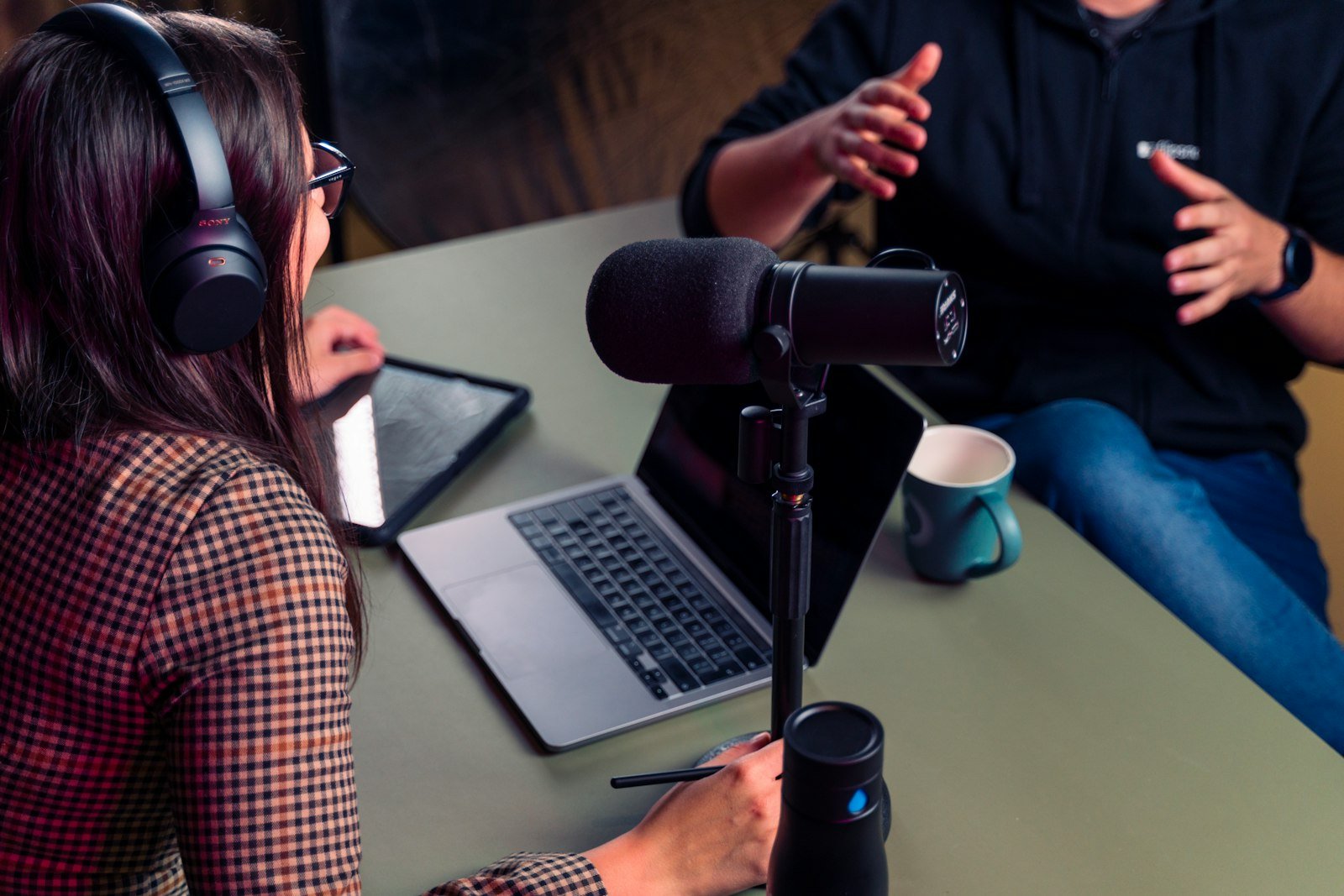
Descript won’t earn anything for you while you sleep. What it does is cut the slowest part of podcast editing, finding and removing the bad bits, down to reading and deleting text. That makes per-episode editing for small shows a realistic side business, as long as you price it properly and keep the consent and licence rules straight.
At a glance
The Descript editing plan on one card
| Method | Editing audio or video podcasts for small businesses and solo hosts, per episode or monthly |
| Startup cost | $0 to practise on the free plan; Creator is $35 a month billed monthly or $24 a month billed yearly (checked 15 October 2026) |
| Your cost per unit | About $8.75 of a monthly Creator plan per episode at four episodes a month |
| What clients pay | Upwork’s hiring guide: $50 to $200 for single-episode audio cleanup, $200 to $500 for a full edit with intro and outro, $800 to $2,500 a month on retainer |
| Income | Not guaranteed |
I haven’t run a podcast editing service myself, so everything here comes from published prices, job posts and Descript’s own documents, checked on 15 October 2026. For plans, credit costs and the refund rules, read my Descript review first.
Five ways to get paid with Descript, side by side
| Method | What the market shows | Skill needed | My take |
|---|---|---|---|
| Per-episode audio editing | $50 to $500 per episode on Upwork’s guide; one Fiverr seller lists $20 for up to 30 minutes | Good ears, patience | The best starting point |
| Video podcast episodes | $500 to $1,200 per episode on Upwork’s guide | Basic video editing, captions | Better pay, more hours per episode |
| Monthly editing retainer | $800 to $2,500 a month on Upwork’s guide | Reliability and a repeatable checklist | Where per-episode clients should end up |
| Hourly editing jobs | One recent Upwork post: $15 to $30 an hour for 30 to 45-minute episodes every two weeks, US-based only | Descript and video editing | Fine for experience, weak for income |
| Descript affiliate links | $25 once per new paid subscription, 30-day window | An audience that edits audio or video | Small extra, not a plan on its own |
Per-episode podcast editing, step by step
Plenty of business owners start a podcast and stall at episode six because editing eats their evenings. They don’t want a producer. They want the ums, false starts and long pauses gone, decent sound, their intro on the front and a file their host accepts. Descript was built for exactly that.
What a delivery looks like
- Get the files right. Ask for a separate track per speaker. Descript handles multitrack transcription on every plan, and if the host records in Zoom, SquadCast or Restream, those import directly.
- Edit in the transcript. Remove false starts, tangents the host flagged and dead air by deleting text, then listen through every cut. Transcript edits can clip a breath or a word ending, and listening is the part clients are really paying for.
- Clean the sound. Studio Sound and Remove Filler Words each cost at most 30 credits per file, so budget up to 60 credits per track per episode.
- Add the fixed parts. Intro, outro, music and ad reads the client supplies.
- Deliver. Export the audio, or publish straight to hosts Descript connects with, such as Buzzsprout, Transistor or Captivate, and add the transcript as a bonus.
Finding the first three clients
- Look for local business podcasts that have gone quiet. A host who posted weekly and then stopped is often stuck on editing.
- Offer to edit one existing raw episode at a reduced price, with the before and after as your pitch.
- On Upwork, search for “Descript” in podcast jobs: posts that name the tool show the client already understands the workflow.
- Build a short portfolio page with real before-and-after clips, used with each client’s permission.
Worked example (my assumptions, real market prices). One client, four 45-minute interview episodes a month, two speakers on separate tracks, at $150 an episode: inside Upwork’s $50 to $200 band for audio cleanup and below the $200 to $500 full-edit range.
- Fee: 4 × $150 = $600 a month
- Descript Creator, billed monthly: $35, about $8.75 per episode
- Media used: 4 episodes × 45 minutes × 2 tracks = 360 of Creator’s 1,800 minutes
- Credits at worst: 2 tracks × 2 tools × 30 credits × 4 episodes = 480 of 800
- Time, my estimate: 3 hours an episode including listening and revisions, so 12 hours
- Left after the plan: $565, or about $47.08 an hour before platform fees and tax
The same plan has the minutes for four more clients like this, but not the credits: the second client would push you past 800 and into top-ups at $0.05 to $0.10 a credit.
Three smaller routes
Video podcast episodes
Upwork’s guide puts video podcast production at $500 to $1,200 per episode. Descript’s Hobbyist plan exports 1080p without a watermark and Creator goes to 4K. More time goes into framing, captions and checking sync, and the Eye Contact and Green Screen tools use credits, so price accordingly.
Fixing a flubbed line with the host’s cloned voice
Descript can patch a mispronounced name or a wrong figure with an AI copy of the speaker’s voice, which saves a re-record. It’s an add-on to editing, not a service by itself, and it only works if the host reads Descript’s consent statement aloud themselves. Put in writing which kinds of fixes they’ve approved.
The affiliate program
The affiliate terms page still describes “15% recurring” commission for the first year in its summary, but section 3 now says a flat $25 per new qualifying subscription, paid once, with no commission on renewals and a 30-day window from the first click. It runs on PartnerStack with PayPal payouts, needs an application, and bans bidding on Descript keywords and offering coupons without written approval. Useful only if you already publish editing tutorials.
Rules to know before you take a client’s recording
- Descript’s licence is written for internal use. Section 5.1 of its terms covers “personal or internal business use” and doesn’t mention editing for clients. The cleanest set-up is the client paying for the plan and adding you as an Editor. If you use your own plan, ask Descript support to confirm in writing.
- Switch off data sharing. The terms let Descript train on inputs and outputs unless you opt out. Client recordings aren’t yours to share, so turn off “Share data with Descript” in App Settings before importing anything.
- Voice clones need the speaker’s own consent. Descript requires a recorded statement from the voice owner and won’t clone anyone who can’t give it.
- YouTube labels. A creator cloning their own voice for voiceovers or dubs, audio repair and captions are all listed as minor edits that don’t need disclosure. Making a real person appear to say something they didn’t say does.
- Clips at volume. Since 15 July 2025, YouTube’s monetisation policy targets “inauthentic” mass-produced and repetitive content. Fifty near-identical clips a week can cost a client’s channel its ad income.
- Your own reviews. The FTC rule on fake reviews and testimonials, in force since 21 October 2024, bans invented testimonials and paying for reviews that must be positive. Penalties run to $51,744 per violation. Use real client feedback or none.
Related reading: How to make money with ElevenLabs · How to make money with Otter.ai
Mistakes that cost editors money
- Quoting a flat monthly price without a cap on episode length or revisions.
- Running Underlord on client work without checking the Usage tab: it has no fixed price per task.
- Starting on Hobbyist. It can’t buy top-ups, so one long episode in a busy month can stall a delivery.
- Paying for a year before you have two steady clients. Descript refunds a plan only within 48 hours of the invoice.
You’ll probably do well at this if you can listen to the same hour of talk carefully, reply to clients on time and enjoy small fixes that nobody notices when they’re done right.
Give it a miss if you want income without client deadlines, dislike listening to long conversations, or hoped AI would do the editing while you collect the fee. The listening is the job.
The figures on this page are examples, not income claims: what you earn depends on your skills, your clients and the time you put in. I don’t earn a commission from Descript. This guide is general information, not legal advice; check the current terms of Descript and any platform you sell on.
Update log: 15 October 2026: first published, with prices checked that day.
Sources
- Descript pricing, integrations and Terms of Service
- Descript help: media minutes and AI credits, top-ups, refunds, AI speakers and data privacy
- Descript affiliate terms and how the affiliate program works
- Upwork: hire podcast editors (price guide) and Upwork job: podcast editing using Descript
- Fiverr gig: podcast audio edit
- YouTube Help: disclosing altered or synthetic content and Plagiarism Today: YouTube targets inauthentic content
- Morgan Lewis: FTC final rule on reviews and testimonials
Leave a Reply